AI Education Software Development That Teachers Trust And Students Use
Evolve Edge offers AI education software development for schools, universities, edtech companies, and training providers, with teachers in control and student data protected from day one.
- Teachers approve every grade
- FERPA and COPPA ready
- Works with Canvas, Moodle, and Google Classroom
- Deployed at Carnegie Mellon University
An Education Software Development Company For Schools, Universities, And EdTech
We build AI for the people who run classrooms, labs, and learning products. Each project starts with one clear problem and one first build.
Teachers spend their evenings grading. Students wait days for feedback. And every new tool has to pass a privacy review before anyone can use it.
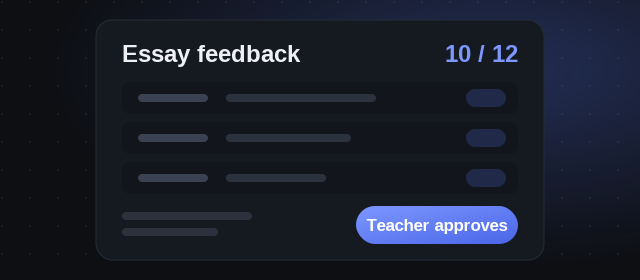
K-12 Schools And Districts
The challenge: Teachers lose their evenings to grading and lesson prep.
Our first build: A grading copilot that drafts rubric feedback for teachers to approve.
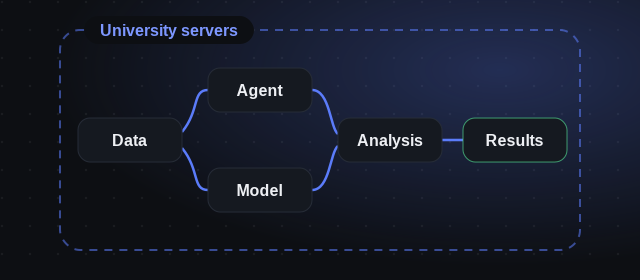
Universities And Research Labs
The challenge: Researchers wait on engineers before every AI experiment.
Our first build: A research platform, like DARE, that teams run themselves on university servers.
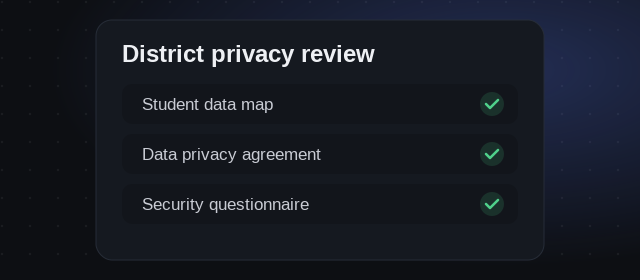
EdTech Companies
The challenge: Your AI feature works, but districts stall it in privacy review.
Our first build: AI features with the data maps and agreements districts expect.
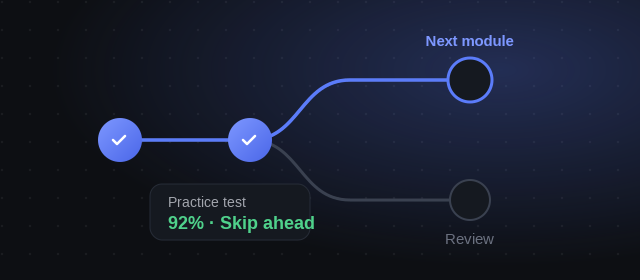
Training And Certification Providers
The challenge: Every learner gets the same course, whatever they already know.
Our first build: Learning paths and practice tests that adjust to each learner's results.
AI That Gives Teachers Their Evenings Back
The AI does the first draft. Teachers make every decision.
Grading Copilots With Teacher Approval
The AI reads each essay against your rubric and drafts a score with comments. Teachers edit or approve it before any student sees a grade.
Lesson And Quiz Drafts
Teachers name the topic and standard, and the AI drafts a lesson plan, quiz, and answer key. Teachers adjust everything before it reaches a class.
Materials For Every Reading Level
One text becomes several versions at different reading levels or languages, so every student works on the same topic at the right level.
Early Alerts For Struggling Students
The system spots missed work and falling quiz scores, then alerts the teacher. It never labels students or contacts families on its own.
AI Tutor Development That Guides Instead Of Giving Answers
A tutor that hands out answers teaches students to copy. We build AI tutors that work the way good teachers do.
- 1
Hints And Questions Before Answers
The tutor asks what the student has tried, then offers a hint or a smaller step. Teachers decide when, or whether, a full answer appears.
- 2
Learning Paths That Adjust To Each Student
Students who master a skill move ahead. Students who struggle get more practice and a new explanation, and teachers see who needs help.
- 3
Accommodations Built In
Read-aloud, simpler wording, and translation are part of the tutor from day one, so English learners and students with IEPs aren't left out.
Learning And Research Platforms We've Built
Two of our education and research platforms are live today.
 Deployed at Carnegie Mellon University
DARE: AI Research Without An Engineering Team
DARE is an agentic AI research platform. Scientists and PhD researchers build, run, and share AI workflows without writing code, and all processing stays on university infrastructure. It is now deployed at Carnegie Mellon University.
Read the DARE case study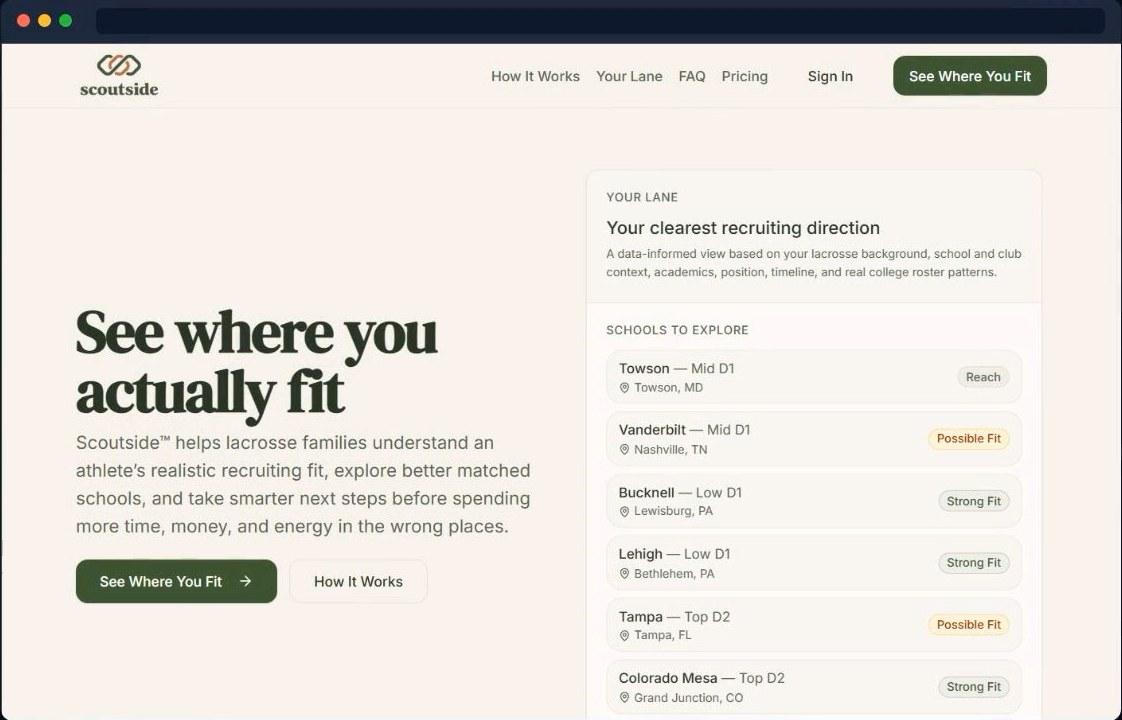
Scoutside: A Clearer Path To College Lacrosse
Scoutside turns college lacrosse recruiting into a clear, personal journey for student-athletes and their families. It scores how well each college fits an athlete and drafts tailored outreach messages to send to college coaches.
Read the Scoutside case study
Have a course or workflow in mind? Send us one course, and we'll show you where AI can help and what a pilot would look like.
Bring Us One CourseAI For Universities, Research Teams, And Student Services
Campuses need AI that respects research data and helps students find answers faster.
Research Tools On Your Own Infrastructure
Research teams build and run AI workflows on university servers, so sensitive data stays inside the institution and studies don't wait on engineers.
Course Material Q&A
Students ask questions and get answers drawn from your own lectures, readings, and syllabi, with a link to each source. RAG Studio shows how.
Advising And Student Services Chat
A chat assistant answers common questions about deadlines, financial aid steps, and campus services at any hour, and passes harder cases to staff.
Admissions And Enrollment Support
AI answers applicant questions, organizes application files, and flags missing documents, while admissions staff make every final decision about who gets in.
Custom LMS Development And LMS Integration
Most schools don't need a new LMS. They need AI that works inside the one they already have. We do both.
AI Inside Canvas, Moodle, Or Blackboard
We add AI tools to the LMS your teachers already use through LTI 1.3, so there are no new logins or copying between systems.
Custom Learning Platforms
When an off-the-shelf LMS doesn't fit your courses, certifications, or business model, we build a learning platform around the way you actually teach.
Rostering And Single Sign-On
Classes, students, and teachers sync from Clever, ClassLink, or OneRoster, and everyone signs in with the school account they already use every day.
Gradebook Sync
Grades that teachers approve flow straight back to the LMS gradebook, so nothing is typed twice and every record stays in one place.
EdTech Software Development For Learning Products
Schools buy carefully. We build learning products that are ready for how they buy.
From MVP To District-Ready
We take your learning product from first version to something districts can buy, with the security, admin tools, and reports they expect.
Built To Pass Privacy Reviews
Data maps, privacy agreements, and answers to district questionnaires are ready before your sales calls, so deals don't stall in legal review.
Outcome Reporting Schools Ask For
Dashboards show usage and progress by class and by school, giving administrators the evidence they need when it is time to renew.
Ready For Back-To-School Traffic
Your platform handles the first week of term, when every student logs in at once, without slowing down or going offline for anyone.
Starting from scratch? See our MVP development service. Expecting fast growth? See how scalability engineering keeps your platform up.
Academic Integrity Without Unreliable AI Detectors
AI detectors guess, and they often guess wrong. They flag honest students, especially those writing in a second language. We build tools that make honest work easy to show instead.
- 1
Draft History Over Detection Scores
Students write in a tool that saves each draft, so teachers can see how the work took shape instead of trusting a guess.
- 2
Assignments That Reward Real Thinking
The AI helps teachers rework prompts around personal reflection, class discussion, and in-class steps that are hard to hand off.
- 3
AI-Use Settings Teachers Control
Each assignment states what AI help is allowed, from none to full, and the tools follow that rule for every student.
Student Privacy And Accessibility Built In
Schools can't use a tool their privacy team won't approve. We design for those reviews from the first line of code.
FERPA-Ready Data Handling
Student records stay in your accounts, access is limited to the people who need it, and AI providers are barred by contract from training on them.
Parental Consent For Under-13s
For children under 13, we build consent flows that meet the amended COPPA rule, including separate consent before any data goes to a third party.
District Privacy Agreements
We sign data privacy agreements, complete district questionnaires, and follow state student privacy laws, such as California's SOPIPA and Illinois's SOPPA, in every build.
Accessible To Every Student
Every screen is built to WCAG 2.1 AA, the standard the ADA Title II rule sets for public schools and universities, and tested with screen readers.
How An Education AI Project Runs
We plan around the school year, so nothing new lands on teachers in the middle of a term.
- When: Before term
Start With Teachers
We sit with the teachers who will use the tool, map how their week really runs, and agree on what success should look like.
- When: Pilot term
Pilot In A Few Classrooms
A small group of classes uses the tool for one unit or term, with weekly check-ins and quick fixes based on teacher feedback.
- When: End of term
Measure Learning, Not Just Logins
We compare results against the goals agreed at the start, such as grading time, feedback speed, and quiz scores, and report honestly.
- When: Next term
Scale Across Schools
After review, the tool rolls out to more classes before the next term, with teacher training, admin controls, and ongoing support.
AI Education Software Development FAQs
Will AI replace teachers?
No. Our tools draft, suggest, and flag, but teachers stay in charge. They approve every grade, choose the materials their class uses, and decide what happens next for each student. The goal is to give teachers back the hours they spend on paperwork so they can spend more time teaching.
How do you stop students from using AI to cheat?
Not with AI detectors. They often flag honest work as AI-written, and students writing in a second language are flagged most. Instead, we build tools that save draft history, help teachers design assignments that are hard to hand off, and let each teacher set clear rules on how much AI help is allowed.
Is student data used to train AI models?
No. Student data stays in your accounts, and our contracts with AI providers bar them from training on it. Only the people who need access get it. For children under 13, the amended COPPA rule requires separate parental consent before data is shared with third parties, and we build that consent into the product.
Can it work with Canvas, Moodle, Blackboard, or Google Classroom?
Yes. We connect through LTI 1.3 and each platform's own connection tools, so AI features appear inside the LMS teachers already use. Classes and students sync through Clever, ClassLink, or OneRoster where your schools use them, and approved grades go straight back to the gradebook.
How do you know it actually improves learning?
We agree on what to measure with your teachers before the pilot starts, such as feedback speed, grading time, or quiz results. Then we compare results before and after the pilot and, where a school can support it, against classes not using the tool. You get an honest report, including what didn't work.
Will it pass our district's privacy review?
It is built to. Before your review starts, we prepare a data privacy agreement, a plain map of what data the tool collects and where it goes, and answers to the questionnaires districts usually send. The work also covers your state's student privacy law, so your review team has fewer questions to chase.
Is it accessible for students with disabilities?
Yes. The ADA Title II rule now expects public schools and universities to meet WCAG 2.1 AA, and we build to that level. We test with screen readers and keyboard-only navigation, and the tutor's built-in accommodations help students who need extra support.
What does a first education AI project cost?
It depends on the size of the first step. Most projects start with one course or one workflow, priced after a short scoping call. The main cost drivers are the number of systems to connect, the age of the students, and the privacy reviews involved.
Start With One Classroom
Pick one course, one grade level, or one task that takes too much of your teachers' time. We'll scope it with you and plan a pilot your privacy team can sign off on. That's how AI education software development should start: small, measured, and in teachers' hands.
or email contact@evolveedge.co