Insurance AI Development Services That Speed Up Claims And Underwriting
Evolve Edge provides insurance AI development services for carriers, MGAs, TPAs, health insurers, and insurtechs, building claims, fraud, and underwriting tools that keep licensed people in charge of the calls that matter.
- SOC 2 Type II
- Works with Guidewire and Duck Creek
- Humans decide every denial
- Fairness testing built in
An Insurance Software Development Company For Every Part Of The Market
Carriers, MGAs, administrators, and health plans each feel the pressure in a different place. Here is where AI usually helps first.
Policyholders want a fast claim, fraudsters count on a rushed one, and regulators expect every underwriting decision to be fair.
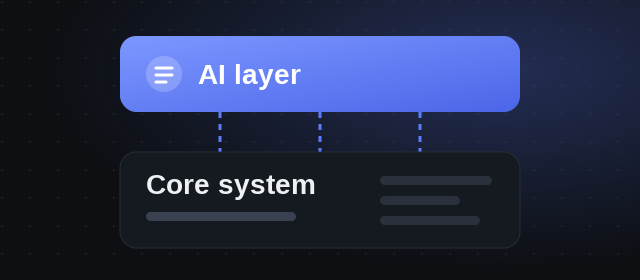
Carriers
Modernizing claims and underwriting around Guidewire or Duck Creek without a risky core replacement.
Where AI helps first: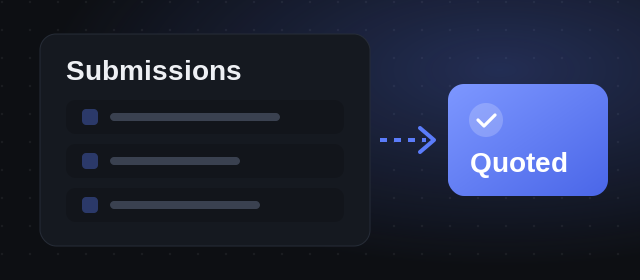
MGAs And Insurtechs
Growing written premium quickly without hiring underwriters and adjusters at the same pace.
Where AI helps first: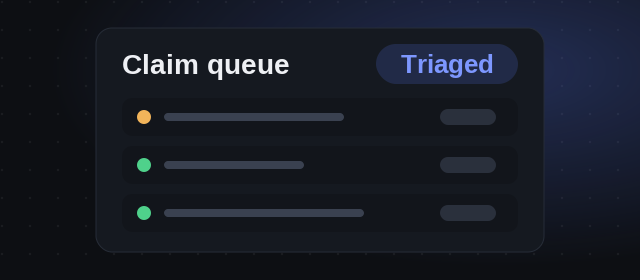
TPAs And Claims Administrators
Handling more claims per adjuster while meeting every client's service deadlines and reporting needs.
Where AI helps first: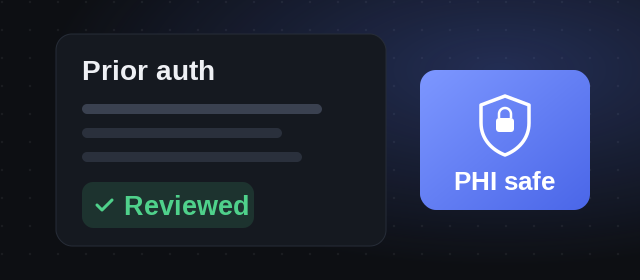
Health Insurers
Reviewing claims and prior authorization requests faster while keeping member health data protected.
Where AI helps first:
Building for hospitals and clinics instead? See our healthcare AI development work.
Claims Processing Software Development, From First Notice To Final Payment
Slow claims frustrate policyholders, overload adjusters, and let leakage creep in. We build claims tools that take routine work off your team, from the first call to the final payment.
- 1
FNOL Intake
Voice or chat agents capture every required field and flag injury claims for a person.
- 2
Triage And Routing
Each claim is scored for severity and complexity, then sent to the right adjuster.
- 3
Document Reading
Medical records, CMS-1500 forms, repair estimates, and police reports become structured, searchable data.
- 4
Adjuster Copilot
Adjusters get a claim summary, coverage checks, and suggested next steps in one view.
Taking claims by phone? See our voice AI for claims calls.
Insurance Fraud Detection Software Development That Finds Rings, Not Just Red Flags
One suspicious claim is easy to spot. Organized fraud is not, because it spreads small, normal-looking claims across many people, clinics, and repair shops.
Network Analysis Across Claims
Shared addresses, providers, attorneys, and phone numbers are linked, so hidden rings appear as clusters.
Scoring At First Notice
Claims are scored the moment they arrive, before money goes out, not months after payment.
Case Files Ready For The SIU
Referrals arrive with the linked claims, evidence, and timeline already pulled together for investigators.
Fewer False Referrals
Honest policyholders stay out of investigations, so their claims keep moving at normal speed.
Fighting payment or account fraud? See our fintech AI work.
AI Underwriting Software Development With Underwriters In Charge
Submissions pile up while underwriters retype data from emails and PDFs. AI clears that backlog, and every pricing and acceptance decision stays with your underwriters.
Submission Intake
ACORD forms, loss runs, and broker emails are read and turned into a clean submission.
Risk Scoring With Third-Party Data
Property, vehicle, and business data is added automatically, with a risk score underwriters can question.
Appetite And Priority Triage
Submissions outside your appetite are flagged early, and the best-fit risks are quoted first.
Authority Limits And Referrals
Anything beyond an underwriter's authority is routed for referral, following the rules you already use.
Sitting on a claims or submission backlog? Show us one workflow, and we'll point to where AI can take time out of it.
Show Us Your WorkflowMore AI Agents For Insurance Teams
Beyond claims and underwriting, these AI agents for insurance handle the questions and follow-ups that fill your team's day.
Policy Servicing
Address changes, ID cards, and certificate requests handled any time and logged in your system.
Renewal And Retention Outreach
Renewal reminders and follow-ups go only to policyholders who have given TCPA-compliant consent.
Broker And Agent Support
Brokers get quick answers on appetite, submission status, and missing documents without waiting on hold.
Subrogation Recovery
Paid claims are checked for recovery chances against at-fault parties that adjusters may have missed.
Member Services For Health Plans
Members get answers on benefits, claim status, and authorizations, with their health data kept protected.
Coverage Questions For Staff
Staff ask coverage questions in plain English and get answers citing the exact policy clause.
Responsible AI That Holds Up To Regulator Review
State insurance regulators now ask how insurers use AI and what controls sit around it. We build models with those answers already written down.
Unfair Discrimination Testing
Models are checked for unfair outcomes against the NAIC bulletin and state rules such as Colorado's.
Adverse Action Notices Under FCRA
When consumer report data affects a decision, the required notice and its reasons are generated.
A Governed AI Program
Each model is recorded with its owner, purpose, and test history, as the NAIC bulletin expects.
Policyholder Data Protection
Encryption, access controls, and SOC 2 evidence that support GLBA and state data security laws.
Getting ready for an audit? See our HIPAA and SOC 2 Compliance Pack and security engineering services.
Works With Guidewire, Duck Creek, And Your Core Systems
AI should add to your core system, not compete with it. We connect through each platform's own APIs and integration tools.
Core Systems
Guidewire, Duck Creek, Majesco, Sapiens, and custom policy admin systems.
Claims Data
Verisk ISO ClaimSearch, CCC, and Mitchell for claims and repair data.
Underwriting Data
LexisNexis and Verisk, plus property, vehicle, and business data feeds.
Forms And Channels
ACORD forms, broker portals, shared inboxes, and policyholder phone lines.
How An Insurance AI Project Runs
Start small, prove it on your own data, then grow. Every project follows the same four steps.
- Step 1
Pick One Line And One Workflow
We start with one line of business and one workflow, such as auto claims triage.
- Step 2
Back-Test On Closed Claims
The AI is tested on past claims where the right outcome is already known.
- Step 3
Side By Side With Your Team
Adjusters or underwriters review its suggestions for several weeks before it handles live work.
- Step 4
Expand Across Lines Of Business
Once results hold up, the same approach extends to new lines, states, and workflows.
Insurance AI Development FAQs
Can you integrate with Guidewire, Duck Creek, or our own core system?
Yes. We build on each platform's APIs and integration frameworks, so claims and policy data flow both ways and adjusters never copy results between screens.
How do you test underwriting models for unfair discrimination?
We compare outcomes such as approval rates and prices across groups, using methods your actuaries and regulators recognize, and repeat the checks whenever the model is retrained.
How do you find fraud rings, not just single suspicious claims?
We look for patterns no single claim shows, such as the same clinic, tow company, and attorney appearing together across dozens of unrelated accidents.
Can the AI read medical records, repair estimates, and police reports?
Yes, including scanned PDFs and photos. Any value the AI is unsure about goes to a person to confirm, so unclear data never lands in the claim file unchecked.
Does the AI ever deny a claim on its own?
No. It can fast-track simple, clear claims within limits you set, but every denial is decided by a licensed adjuster, and that rule is built into the workflow.
Do you work with health insurers?
Yes. We support claims review, prior authorization intake, and member services for health plans, with HIPAA safeguards in place and a business associate agreement signed first.
How long before we see results?
Back-testing on closed claims shows how the AI performs within the first few weeks. Most first workflows go live within three to four months, depending on your core system.
What does a first project look like, and what does it cost?
One workflow on one line of business, priced in a written estimate after scoping. Cost depends on your core systems, document volume, and how much human review you want.
Start With One Line Of Business
Our insurance AI development services begin with a single workflow. Tell us which one slows your team down most, from FNOL to submission intake, and an engineer will reply within one business day with a short plan to test it on your own closed claims.
or email contact@evolveedge.co