Manufacturing AI Development Services That Keep The Line Running
Evolve Edge provides manufacturing AI development services for plants of every age, building inspection, maintenance, and scheduling tools that work with the equipment you already run.
- Works with your PLCs and MES
- Runs on-site when needed
- OT security built in
- SOC 2 Type II
A Manufacturing Software Development Company For Plants Old And New
Every plant protects quality and uptime, but the first win depends on what you make and how.
A defect your customer finds costs far more than one caught on the line, and every minute of unplanned downtime adds up fast.
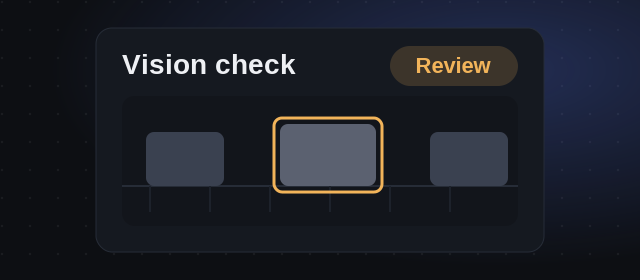
Discrete Manufacturers
On the floor: defects caught at final inspection, or worse, by customers.
First project: computer vision inspection on one high-value line.
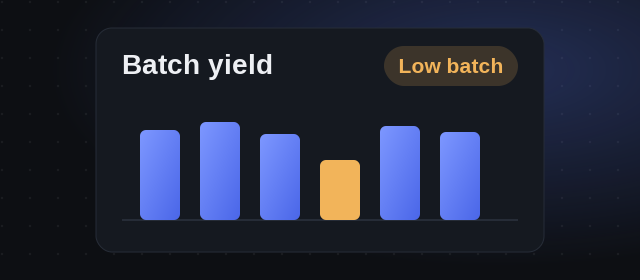
Process Manufacturers
On the floor: yield that swings from batch to batch without a clear reason.
First project: yield and scrap analysis across recent batches.
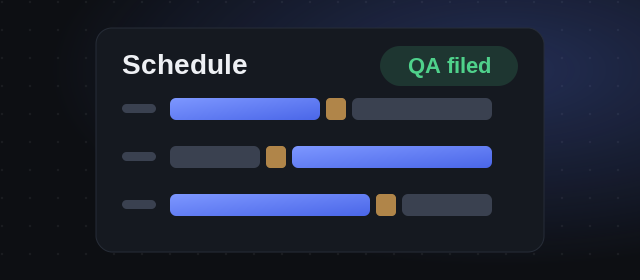
Contract Manufacturers
On the floor: many customers, frequent changeovers, and strict quality records for each.
First project: smarter scheduling and automated quality paperwork.
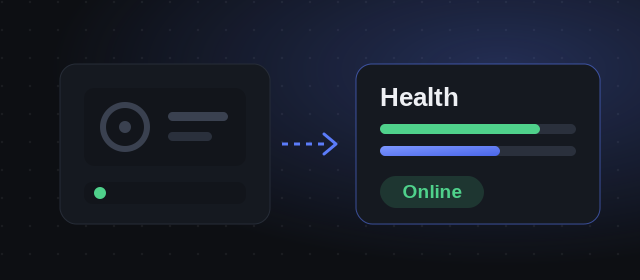
Industrial Equipment Makers
On the floor: customers asking for machines that report their own health.
First project: connected monitoring software built into your equipment.
Computer Vision Quality Inspection That Keeps Up With Your Line
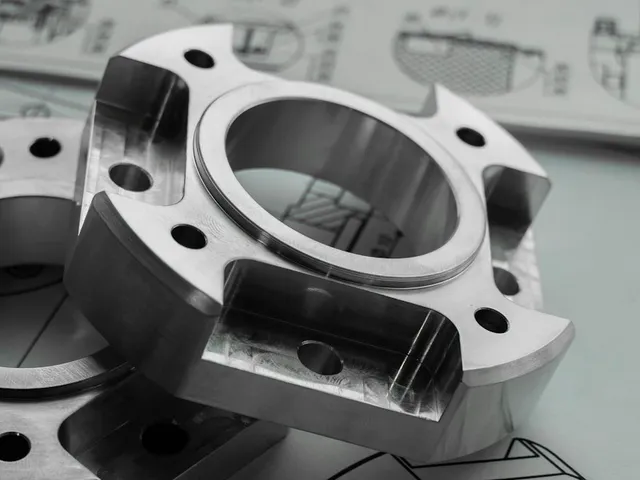
AI visual inspection checks parts at full line speed, without the fatigue that comes with manual inspection. You decide how cautious each line should be.
Works With Your Cameras
Existing industrial cameras are used wherever angles and lighting allow, keeping hardware costs low.
Trained Per Product Family
Models learn each product family's normal look, so variants don't trigger constant false alarms.
New Defect Types Flagged
Defects the system hasn't seen before are sent to your team instead of being guessed at.
You Set The Caution Level
Critical lines send borderline parts to an inspector, while high-volume lines can run more independently.
Predictive Maintenance Software Development For The Machines You Already Run
Unplanned stops are expensive, and fixed maintenance schedules waste parts and labor. Predictive maintenance services each machine when its data says it needs it.
- 1
Collect
Vibration, temperature, and PLC data are gathered, with sensors added where machines have none.
- 2
Predict
Early warning signs are spotted in that data, long before a part fails on shift.
- 3
Plan
Work orders go to your maintenance system with enough lead time to schedule the fix.
AI For OEE, Scheduling, And Yield
Small losses add up across every shift. AI shows where time and material go, and what to change first.
OEE Loss Tracking
Downtime, slow cycles, and quality losses are tracked live and traced to likely causes.
Production Scheduling
Schedules balance due dates, machine availability, and changeovers, then update as soon as plans change.
Yield And Scrap Analysis
Settings most linked to scrap and rework are identified, so engineers know what to adjust.
Faster Changeovers
Changeover steps are tracked and compared across shifts to find the fastest, safest way.
Planning demand and suppliers instead? See our supply chain AI work.
Pick one line, and we'll show you what AI could catch on it, from defects to downtime.
Pick One LineCapture What Your Best Operators Know
When an experienced operator retires, years of hard-won knowledge often leave with them. AI keeps that knowledge on the floor.
- 1
Searchable Work Instructions
Operators ask questions in plain language and get the right procedure for their machine.
- 2
A Troubleshooting Assistant On The Floor
Common faults come with step-by-step fixes drawn from your best technicians' past repairs.
- 3
Shift Handover Summaries
Each shift starts with a short summary of issues, changes, and open jobs from before.
Custom MES Software Development And Integration
Your MES holds the record of what happened on the floor. We add the intelligence around it, or build the pieces it's missing.
AI Inside Your MES
Inspection results, maintenance alerts, and schedules appear inside the MES your team already uses.
Custom Shop-Floor Apps
Tablet apps for checklists, quality records, and downtime reasons, built around how your floor works.
Connecting Older Equipment
Older machines without modern connections are linked through PLC readers, gateways, or added sensors.
Plant Dashboards
Live views of output, downtime, and quality by line, shift, and plant, on any screen.
Building a new industrial software product? See our custom SaaS development services.
Built For The Plant Floor, Not The Lab
Factories have dust, vibration, weak Wi-Fi, and strict security rules. Our systems are built to handle all of it.
Runs On-Site When Needed
Inspection and alerts run on computers inside your plant, close to the machines they watch.
Works Through Weak Connectivity
If the network drops, the system keeps working and syncs its data once it reconnects.
OT Network Security
Plant systems stay segmented from office networks, following ISA/IEC 62443 practices for industrial security.
Production Data Stays Yours
Your process data stays in your own environment and never trains anyone else's models.
Want a deeper security review of your plant systems? See our security engineering services.
Works With Your PLCs, SCADA, MES, And ERP
We connect through industrial standards like OPC UA and MQTT, so nothing on the line needs replacing.
Machine Data
OPC UA, MQTT, Siemens and Rockwell PLCs, and Ignition SCADA.
Vision Hardware
Cognex, Keyence, Teledyne FLIR, and standard industrial cameras and lighting.
MES And ERP
SAP, Plex, Epicor, and the MES your plant already runs.
Maintenance Systems
Fiix, UpKeep, IBM Maximo, and other CMMS tools for work orders.
How A Manufacturing AI Project Runs
We start on your plant floor, not in a slide deck.
- Station 1
Walk The Line
Our engineers visit the line, review equipment and data, and agree one clear goal.
- Station 2
Collect A Baseline
Current defect, downtime, or scrap rates are measured, so improvement can be proven later.
- Station 3
Run Alongside Your Team
The AI works beside your inspectors, who check its calls before relying on it.
- Station 4
Roll Out Line By Line
Once results beat the baseline, the system expands to more lines and more plants.
Manufacturing AI Development FAQs
What if our lighting or camera angles aren't good enough?
We test your current setup first, then specify the smallest change that fixes it, which is often a new light, a better mount, or one extra camera.
What happens when the AI misses a defect or raises a false alarm?
Every miss and false alarm is logged, reviewed with your quality team, and used to retrain the model, so the same mistake becomes less likely each time.
How long does it take to set up a new product?
A new product family needs a set of good and defective sample images. Your team labels examples, and the model is checked before it goes live.
Our machines are decades old. Can they still feed AI?
Usually, yes. We read data from existing PLCs where possible and add low-cost sensors where not, without changing how the machine itself runs.
Will this disrupt production while it's installed?
No. Cameras and sensors go in during planned downtime, and the system runs alongside your current process until your team is ready to rely on it.
How much history do we need for predictive maintenance?
Some failure history helps, but you can start with condition monitoring that spots unusual behavior while that history builds over the first few months.
Should we build a custom MES or add to the one we have?
Add AI and custom apps around your current MES unless it truly can't support how your plant runs. Replacing an MES is costly and rarely the fastest fix.
What does a first manufacturing AI project cost?
It starts with one line and one problem, priced in a written estimate after a plant walkthrough. Cost depends on hardware, integrations, and data access.
Show Us The Line That Keeps You Up At Night
Our manufacturing AI development services start on your plant floor. Tell us which line has the most defects, downtime, or scrap, and an engineer will reply within one business day to plan a walkthrough and agree what success looks like.
or email contact@evolveedge.co