Energy And Utilities Software Development With AI Your Operators Can Trust
Evolve Edge offers energy and utilities software development for utilities, renewable operators, and energy retailers, with AI that recommends and operators who approve every grid action.
- Operators approve every grid action
- Runs on your own servers
- Built for NERC CIP programs
- SOC 2 Type II
A Utility Software Development Company For Every Part Of The Grid
From the control room to the customer's meter, we build AI around the data you already collect.
Load is climbing as data centers and EVs come online. More of your power depends on the weather. And nothing in the control room can be left to chance.
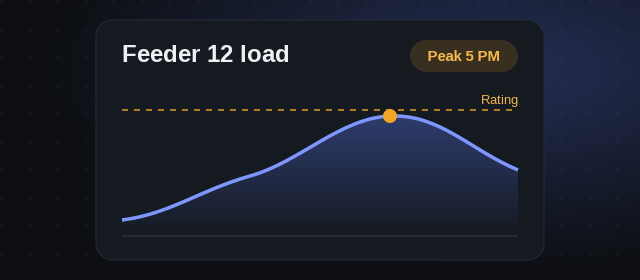
Electric Utilities And Co-ops
Forecast load, speed up outage restoration, and spot failing equipment early, without adding risk to the control room.
Data we use: meter data, SCADA history, weather
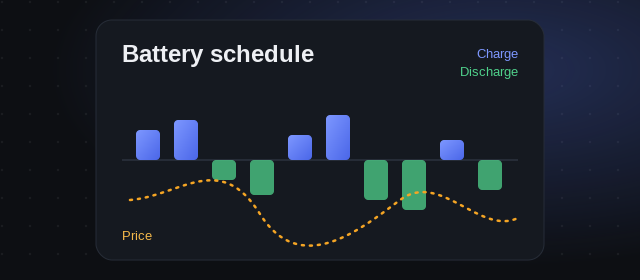
Renewable And Storage Operators
Forecast plant output, schedule batteries around prices and grid needs, and catch weak assets before they cost revenue.
Data we use: inverter data, weather, market prices
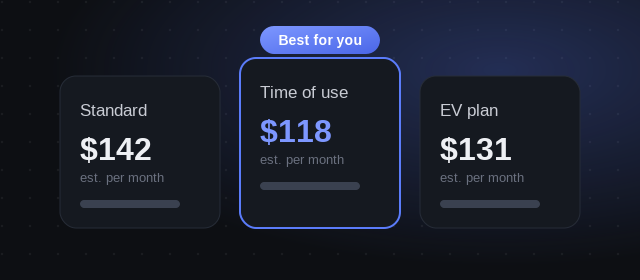
Energy Retailers And Community Choice Aggregators
Answer customer questions faster, help customers compare approved rate plans, and grow enrollment in efficiency and demand response programs.
Data we use: billing, usage, program enrollment
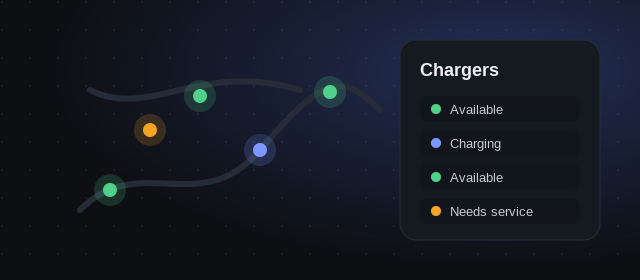
Energy Tech And EV Charging Companies
Build and scale grid-edge products, from charger networks to home energy apps, with the security utilities expect from partners.
Data we use: charger and device telemetry
Load Forecasting Software For A Grid That Keeps Changing
Forecasts drive almost every decision on the grid. We build them on your own data and show how each one was made.
Day-Ahead And Hour-Ahead Load Forecasts
Forecasts for your whole system, each substation, or each feeder, updated through the day as new meter and weather data arrives.
Solar And Wind Output Forecasts
Forecasts for your plants and for rooftop solar combine weather models, satellite cloud data, and each site's own output history over time.
Planning For Data Center, EV, And Heat Pump Growth
Long-range scenarios show where large new loads, EV charging, and electric heating will strain the grid, so planners can act years ahead.
Forecasts Operators Can Question
Every forecast shows its main drivers and a likely range, not one number, so operators know when to trust it or check.
AI That Recommends, While Your Operators Decide
The grid can't run on a black box. Our AI suggests, and people decide.
- 1
Recommendations With Reasons
The AI suggests switching, dispatch, or restoration options and shows the data behind each one, so operators can check its thinking quickly.
- 2
Operator Approval For Every Grid Action
Nothing touches the grid until an authorized operator approves it. Every recommendation, approval, and rejection is logged for reviews and audits.
- 3
Automatic Fallback When Unsure
If the AI loses data or its confidence drops, it stops recommending, your standard procedures take over, and operators get an alert.
Predictive Maintenance For Utilities: Find Problems Before Outages
Many equipment failures give warning signs first. We help your teams see them sooner.
Transformer And Substation Health
Sensor readings, oil test results, and load history are combined to rank which transformers and other substation equipment need attention first.
Line And Vegetation Inspection From Drone Images
Computer vision reviews drone and helicopter images of your lines, flagging damaged equipment and trees growing too close for crews to check.
Wildfire Risk Support For Planning Teams
Weather, vegetation, and equipment data are combined into risk maps that help planners decide where to inspect, upgrade, or change operations.
Work Orders Field Crews Trust
Each flagged problem becomes a work order with photos, location, and the reason it was raised, so crews fix the right thing first.
Renewable Energy Software Development For Solar, Wind, And Storage
More of the grid now depends on assets that follow the weather. We build the software that keeps them productive.
Battery Storage Scheduling
Charge and discharge plans balance market prices, grid needs, and battery wear, and operators can review or change every schedule before it runs.
Curtailment And Underperformance Alerts
Each site's output is compared with what the weather says it should produce, flagging lost energy, faulty inverters, and soiled panels.
Interconnection Paperwork, Faster
AI drafts and checks interconnection applications against utility and grid operator requirements, so fewer applications come back with errors to fix.
DER Aggregation For Wholesale Markets
We build software that groups rooftop solar, batteries, and smart devices into one resource that can join wholesale markets under FERC Order 2222.
Customer Service AI For Outages, Bills, And Energy Programs
Customers call most when the power is out or the bill is high. AI can answer both, any time of day.
Outage Reporting And Updates
Customers report outages by phone or chat at any hour and get restoration updates drawn from your outage system, not generic messages.
Bills Explained In Plain Language
The assistant explains why a bill went up, using the customer's own usage and weather, and passes disputes and payment issues to staff.
Rate Plan Comparisons
Customers see how each commission-approved rate plan would have priced their past usage, so they can choose the plan that suits them.
Demand Response And Efficiency Enrollment
The assistant explains programs, checks eligibility, and enrolls customers in rebates and demand response, then confirms each step in writing.
Want to see how our AI handles calls? See AI Receptionists. Outbound outage alerts go only to customers who have agreed to receive them.
Platforms We've Built For Data-Heavy, Regulated Work
These aren't energy projects. But they solve two problems energy teams face most: keeping data in-house and proving compliance.
 Transferable proof
DARE: AI That Stays On Your Own Infrastructure
DARE is an agentic AI platform that lets researchers build, run, and share AI workflows without engineering help. All processing stays within the institution's own infrastructure. It is deployed at Carnegie Mellon University.
Read the DARE case study- Transferable proof
Jord Tech: Compliance You Can Trace
Jord Tech is a SaaS platform that brings transparency, traceability, and structure to sustainability compliance in recycled-material supply chains. Its material journey viewer shows each product's passport data and cuts admin work.
Read the Jord Tech case study
Send us a year of load or asset data. We'll back-test a model on it and show you what it gets right and what it gets wrong.
Test Us On Your Own DataWorks With SCADA, ADMS, And The Systems You Already Run
New AI shouldn't mean new screens or new risks. We connect to what you have, carefully.
Read-Only First
Every project starts with read-only access. Nothing can write to a control system until your engineering and security teams approve it.
Control Room Systems
We connect to SCADA, EMS, ADMS, and outage management systems, so recommendations appear where operators already work, not on another screen.
Meter And Customer Systems
Usage flows in from AMI and meter data management systems, and account details come from your customer information and billing systems.
Historians And GIS
Years of operating history come from historians such as PI, and asset locations come from GIS, so models learn from your actual network.
Security Built For Critical Energy Infrastructure
We don't make you NERC CIP compliant. That's your program. We build software that supports it.
On-Premises And Offline Options
Models and data can run entirely on your own servers, including networks with no internet connection, so nothing leaves your security perimeter.
Supply Chain Evidence For NERC CIP-013
We provide the vendor security documents, vulnerability disclosures, and access controls your compliance team needs to meet CIP-013 supply chain requirements.
Monitoring That Fits CIP-015
Our software's network activity is documented and easy to monitor, so it fits the internal network monitoring CIP-015 requires from October 2028.
Smart Meter Data Kept Private
Meter data can show when people are home, so we limit access, follow state privacy rules, and never use it to train outside models.
How We Roll Out AI On The Grid
Trust on the grid is earned one step at a time. Each step needs your sign-off before the next one starts.
- 1Replay
Replay Your History
We run the model on past years of your data and compare its forecasts and recommendations with what really happened on your grid.
- 2Shadow
Run In Shadow Mode
The AI runs live alongside your operators for several weeks but touches nothing, and we track how often it would have helped.
- 3Advise
Advise Operators
Recommendations appear in the control room for operators to accept or reject, and we review every decision together each week.
- 4Expand
Expand With Proof
Once results hold up, the tool expands to more substations, plants, or programs, with operator training, monitoring, and ongoing support.
Energy And Utilities Software Development FAQs
What does AI development for energy companies include?
It covers forecasting, grid decision support, asset health, renewable and storage tools, and customer service AI. Behind those sit the data pipelines and system connections that make them work. Most clients start with one of these, usually load forecasting or asset health, and add more once the first one proves itself.
Can the AI control the grid on its own?
No. It recommends options and explains why, but an authorized operator approves every action that touches the grid. If the AI loses data or becomes unsure, it stops recommending and your standard procedures take over. Every recommendation and decision is logged, so your team can review it later.
How accurate will the load forecasts be?
That depends on your data, so we won't promise a number up front. We first back-test the model on your own history and report its error rate by season, hour, and weather type. You see where it does well and where it struggles before anything goes live.
How do you handle solar and wind variability?
Our forecasts combine weather models, satellite cloud data, and each plant's own output history, and they update through the day as conditions change. Instead of one figure, each forecast gives a likely range, so operators can plan reserves for the days when the weather is hardest to predict.
Which systems do you integrate with?
Control room systems such as SCADA, EMS, ADMS, and outage management, plus historians, AMI and meter data systems, GIS, and customer billing. We always begin with read-only connections and agree every further step with your security team. Common utility standards, including IEC CIM, ICCP, and DNP3, are supported.
Can it run on our own servers or an air-gapped network?
Yes. Models, data, and dashboards can run fully inside your own data center, with no outside connection needed. Updates arrive through your own change control process, on your schedule. Our DARE platform already keeps all processing on Carnegie Mellon University's own infrastructure.
How do you support our NERC CIP program?
Your compliance team stays in charge of the program. We supply what they need from a vendor: security documentation and disclosures for CIP-013, role-based access with full logging, and designs that work with the internal network monitoring CIP-015 is phasing in. We can also answer your vendor risk questionnaires.
How does a first energy project start?
With one forecast or one group of assets. We review your data, back-test a model on your history, and share the results before any live use. Cost depends on data quality, the systems involved, and your security needs.
Put Your Grid Data To Work
You already have years of meter, weather, and equipment data. We'll help you turn it into forecasts and recommendations your operators can check and trust. That's how energy and utilities software development should work: proven on your history, tested in shadow mode, and always under your control.
or email contact@evolveedge.co